
 View on GitHub
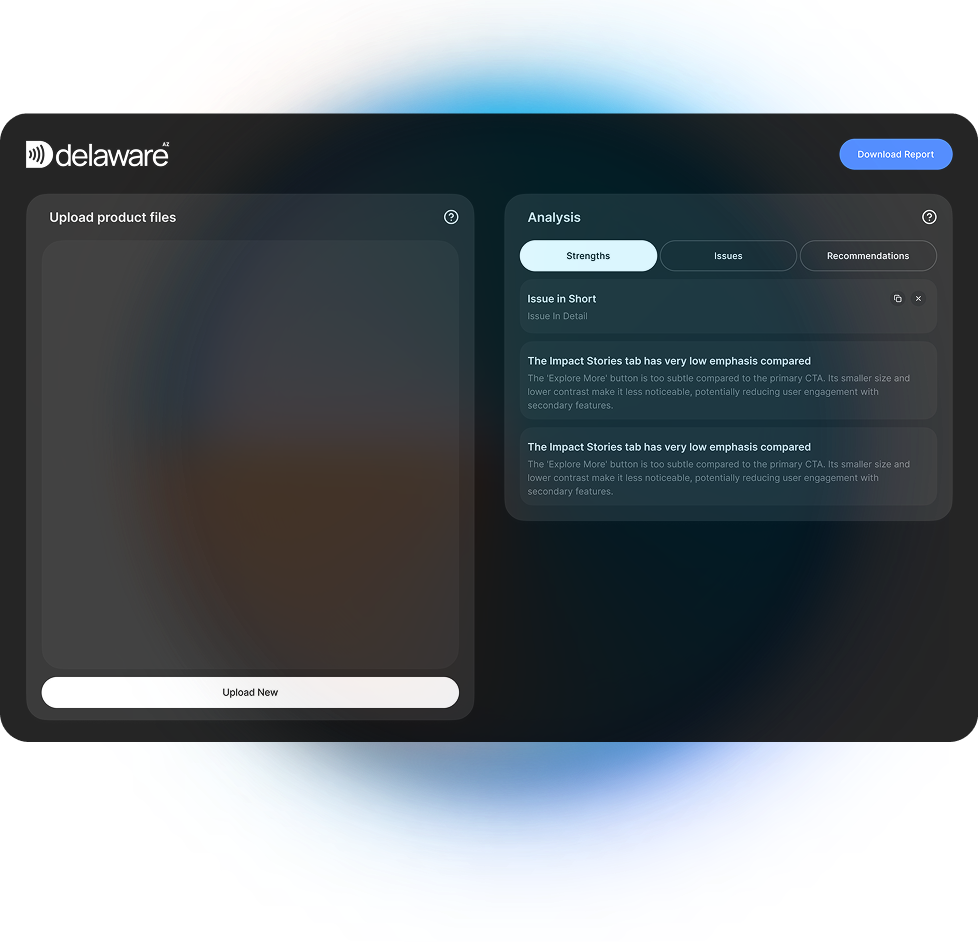
Heuristic driven UX evaluation grounded in usability laws and human behavior
making it more user-friendly and adaptive to modern needs.

Analyzes interfaces using established usability heuristics and cognitive principles. Analyzes interfaces using established usability heuristics and cognitive principles.

Adaptive evaluation based on intended user type and interaction context.

Compares two interface variants to highlight usability trade-offs and risks. Visual: simple split icon or comparison glyph.

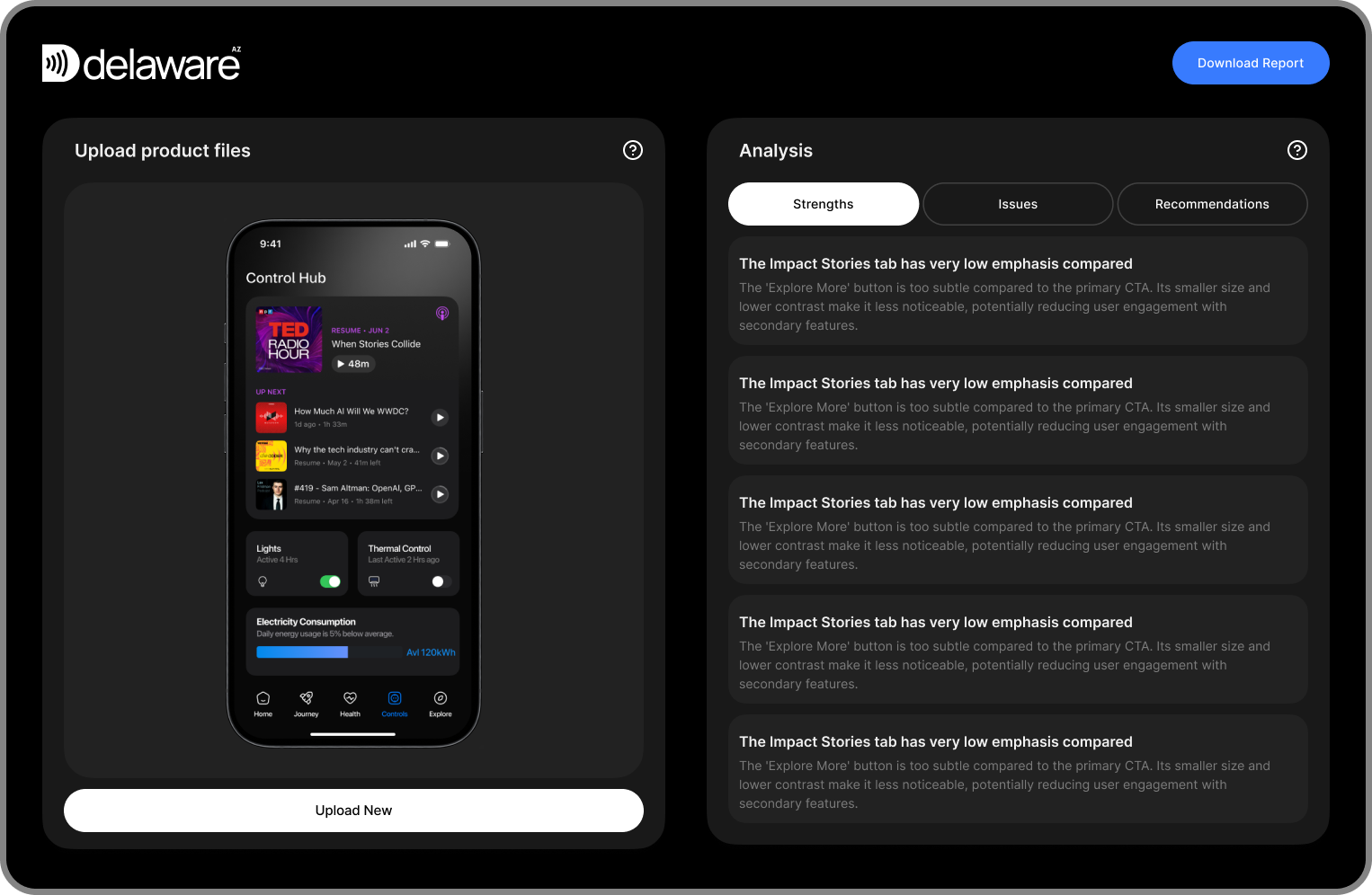
Returns strengths, issues, and improvements grounded in UX principles not opinions.
~32ms avg response
Export evaluations for documentation, reviews, and collaboration.
Evaluate real interfaces using proven usability laws and cognitive principles.
Turn screenshots into clear UX signals you can act on with confidence.
A quick overview of how the tool works, what it evaluates,
and how to use it responsibly within your design process.
The tool works with interface screenshots such as web pages, mobile screens, dashboards, and application layouts. Evaluation focuses on structure, interaction cues, hierarchy, and usability signals visible in the interface.
This tool is best used as a supporting evaluation aid. It can help surface usability patterns and risks early or between research cycles, but it does not model real user behavior or replace direct user research.
The tool is designed to run locally using vision language models. If you can run a supported model such as Qwen or a similar vision capable model on your machine, setup is straightforward and does not require cloud services.
The tool does not assess business logic, content correctness, numerical accuracy, or domain meaning. It focuses only on usability and interaction quality, independent of whether the content is real or complete.
Evaluations draw from established UX heuristics, accessibility guidelines, cognitive psychology concepts, and interaction design principles. Observations are framed around how users typically perceive and interact with interfaces.
Explore the codebase, understand the evaluation logic, and run the tool
locally using vision language models. Contributions, forks, and critical review are welcome.
View on GitHub
